HEAL TOXIC SHAME
How to Heal Toxic Shame
You want it gone. That's the honest hope.
What's actually possible is different, and it lasts longer.
Toxic Shame TURNS YOUR ANGER AGAINST YOU
Toxic shame is the feeling "I am bad." Bad for having needs. Bad for being vulnerable.
As a child, your anger was meant for the people who hurt you. It wasn't safe to show.
So it turned on you and became the mean voice.
Shame and anger stay tied together, and you swing between the two.
Healing is growing enough room in your nervous system to feel anger
without exploding, and shame without collapsing.
WHY UNDERSTANDING IT NEVER FIXED IT
You've probably understood your shame already.
You traced it to childhood.
You named the critic.
You read the books.
And it stayed.
That's not because you haven't understood enough.
Shame is faster than thinking.
You learned it very early, before you had words, to survive.
When your body feels danger, thinking switches off and the old pattern takes over.
"The gap between knowing and doing is in the body."
the three stages of healing toxic shame
This is somatic work. Somatic simply means "of the body,"
and here it means your nervous system.
There are three stages, and each one rests on the one before.
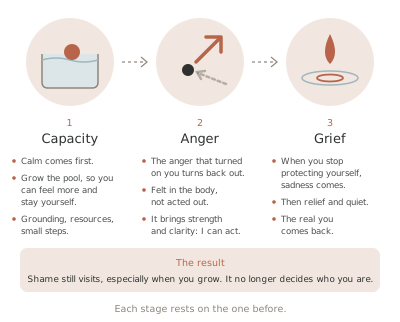
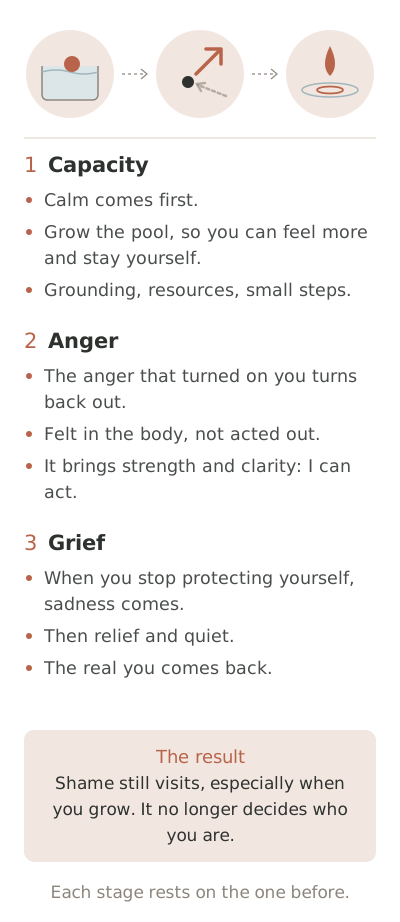
Stage One ・Capacity
Most people want to go straight to the pain. But the feelings under the shame were pushed down for a reason. Open that door too fast, and your nervous system shuts down or overflows.
So the first job isn't to feel more. It's to be able to hold more. That's capacity: how much you can feel and still be yourself.
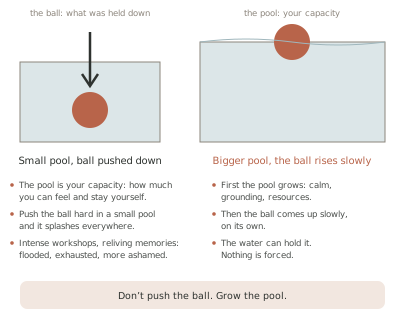
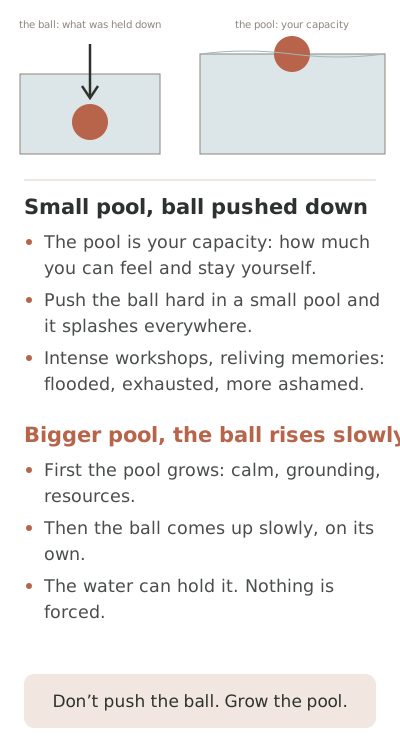
Every session starts with grounding: feeling that you're here, in your body, with something that helps you settle.
Then we work in small drops. You touch a hard feeling a little, then come back to calm, then touch it again. Each time, your nervous system learns: I can feel this, and I can come back.
Stage Two ・Anger
As your nervous system settles, the anger that was turned on you often comes back. This isn't going backwards. Something stuck is starting to move.
Anger isn't violence. Anger is information: something matters, a line was crossed. It's the strength behind a clear no. The goal isn't to explode. It's to get your strength back while staying calm enough to choose what to do with it.
When the anger can finally move the right way, the body often straightens by itself. The chest opens. The head lifts. There's a quiet feeling: I am allowed to be here.
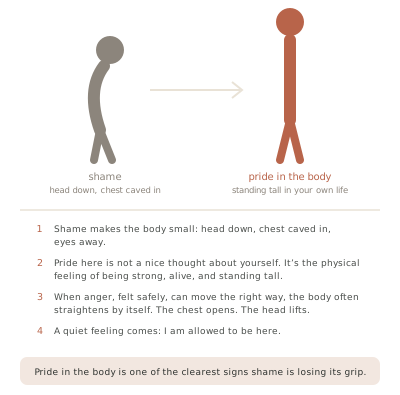
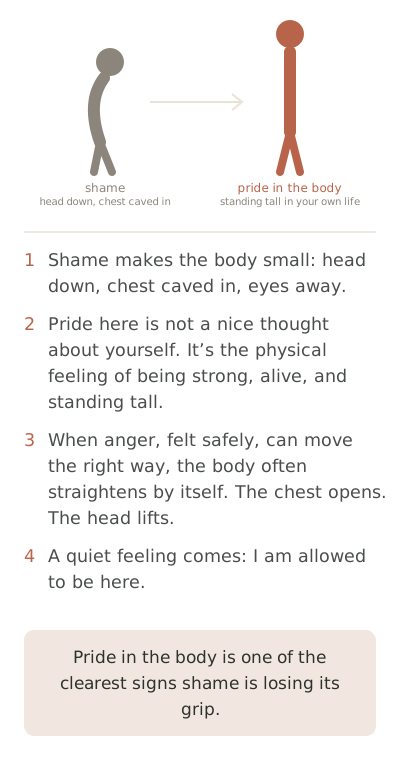
With the anger comes clarity, and a new feeling: I can act. It grows through small moments. You pause before saying yes. You speak up, and nothing terrible happens.
Stage Three ・Grief
When you no longer need all your energy to protect yourself, sadness has room to come. Grief for what happened, and for what was missing.
Grief sounds heavy. For someone carrying toxic shame, it usually feels like relief: tears, then a quiet that wasn't there before.
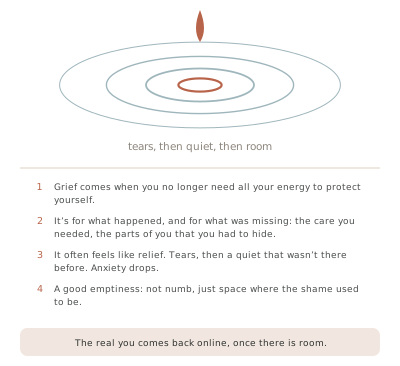
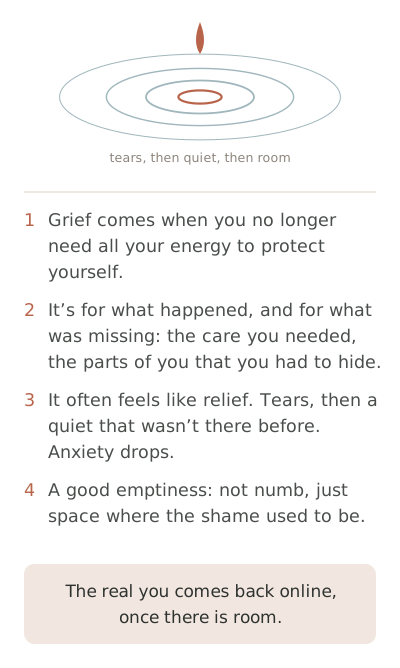
"Grief is not an ending. It makes room for who you really are."
what healing toxic shame looks like
Healing doesn't mean you never feel shame again.
It's a human feeling, and it will still come.
Often it comes back hardest when you're growing:
you speak up, you become more visible, you let yourself be loved.
That doesn't mean healing failed.
A nervous system that was set up to shrink reads growing as danger.
The difference now is that you know what it is.
You can hold it, let it pass, and keep going.
"Change doesn't come from a big emotion. It comes from nervous system capacity."
what THIS ISN'T
This isn't positive thinking, affirmations, or reliving your worst memories.
And it isn't catharsis. My own anger once exploded and hurt people I cared about.
I learned the hard way that anger without calm underneath doesn't heal anything.
That's why this work always starts with calm.

START WITH THE BOOK
Healing Toxic Shame is a free book. Where shame comes from,
why understanding it wasn't enough, and what changes when you
work with your nervous system.
Free. It arrives in your inbox.
THE NEXT STEP
The next step is a First Session: 75 minutes of real somatic work, taken off your package if you continue.
HEAL TOXIC SHAME


© 2026 Matteo Morozzo · healtoxicshame.com